Finance Your Electrical Project Today



Back to Blog
Replacing an Old Ceiling Fan? 5 Things to Check Before Installing the New One
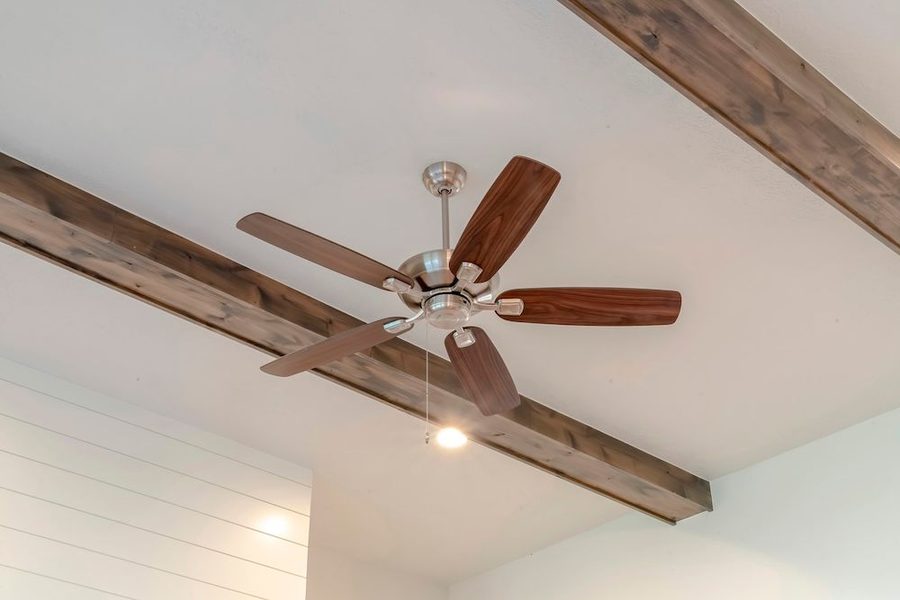
Replacing an old ceiling fan can seem like a straightforward home improvement project. Remove the existing fan, connect the new one, and enjoy better air circulation. However, the fact that a ceiling fan is already installed does not necessarily mean the existing electrical box, wiring, controls, or mounting setup is appropriate for the replacement.
For Las Vegas homeowners, ceiling fans can be a useful complement to air conditioning by creating air movement that helps people feel more comfortable. Before installing a new fan, however, there are several important electrical and installation details to check. Here are five places to start.
Can You Replace an Old Ceiling Fan With Any New Fan?
Not necessarily. Before replacing a ceiling fan, you need to confirm that the electrical box and mounting system can support a fan, the wiring is suitable, the controls are compatible, and the new fan is appropriate for the room and installation location.
Fans differ in size, weight, controls, lighting, and mounting requirements. Older installations may also contain wiring or mounting conditions that should be corrected before another fan is installed.
1. Is the Electrical Box Rated for a Ceiling Fan?
One of the most important things to check is the electrical box above the existing fan.
Ceiling fans place different demands on a mounting system than many ordinary light fixtures. In addition to their weight, fans create movement and vibration while operating. The electrical box and its support therefore need to be listed and suitable for supporting a ceiling fan.
Do not assume a box is fan-rated simply because an old fan was attached to it. Previous installations are not always completed correctly.
Potential warning signs include:
-
Significant wobbling from the old fan
-
Movement around the electrical box or mounting bracket
-
Ceiling damage near the fan
-
Loose mounting hardware
-
An improvised-looking installation
-
An inability to confirm that the box is fan-rated
If the existing support is unsuitable, it should be corrected before installing the replacement fan.
2. Is the Existing Wiring in Good Condition?
Replacing a ceiling fan provides an opportunity to evaluate the wiring supplying it.
Depending on the age and condition of the installation, an electrician may look for damaged insulation, loose connections, signs of overheating, grounding concerns, or previous modifications. The wiring configuration also needs to support the features you want from the new fan.
Older wiring does not automatically mean your entire Las Vegas home needs rewiring. The type and condition of the wiring, grounding, previous alterations, and requirements of the new equipment all matter.
Electrical safety is especially important during fan replacement. Turning off a wall switch alone should not be treated as sufficient protection when performing electrical work. The appropriate circuit must be de-energized and verified before wiring is handled.
If the existing wiring appears damaged or its condition is uncertain, have a licensed electrician evaluate it.
3. Will the New Fan Work With Your Existing Controls?
Today’s ceiling fans offer far more control options than older models.
Depending on the fan, you may have:
-
Pull-chain controls
-
Separate wall switches for the fan and light
-
Remote controls
-
Electronic wall controls
-
Smart controls
-
Integrated lighting controls
The challenge is that not every fan is compatible with every existing switch or control.
For example, a wall dimmer designed for lighting should not automatically be used to control a fan motor. Some fans have remote receivers or integrated electronics that require specific controls. Fans with integrated LED lighting may also have manufacturer-specific requirements.
If you want to upgrade to a smart ceiling fan or control the fan and light separately, the existing wiring configuration should be evaluated first. Depending on the fan, additional wiring or a compatible control may be needed.
Checking compatibility before purchasing the fan can help avoid discovering during installation that your preferred controls will not work as expected.
4. Is the Fan the Right Size and Height for the Room?
A larger ceiling fan is not automatically a better ceiling fan.
Room dimensions, ceiling height, layout, manufacturer recommendations, and required blade clearances should all factor into fan selection. The goal is to install equipment that fits the space while maintaining appropriate clearance from the floor, walls, fixtures, and other obstacles.
Ceiling height also affects mounting.
Some lower ceilings may call for an appropriate flush-mount or low-profile fan. Rooms with higher ceilings may use a downrod to position the fan appropriately.
Vaulted and sloped ceilings require additional consideration. The fan and mounting hardware must be compatible with the ceiling angle, and an appropriate downrod or adapter may be needed.
Before purchasing a replacement, review the manufacturer’s installation requirements for the specific fan rather than assuming the mounting configuration from your old fan will work.
5. Is the Fan Rated for the Installation Location?
This consideration is particularly important if you are installing a ceiling fan in a Las Vegas patio or outdoor living area.
Ceiling fans can carry different environmental ratings.
Indoor or dry-location fans are intended for appropriate interior locations.
Damp-rated fans are designed for certain locations where moisture or humidity may be present but where the equipment is not directly exposed to water, according to its product listing.
Wet-rated fans are designed for applicable locations where direct exposure to water or weather may occur.
A covered patio does not automatically make an indoor-only fan appropriate for the space. Always check the fan’s actual listing and manufacturer instructions before installing it outdoors.
Do Ceiling Fans Help During Las Vegas Summers?
Ceiling fans can complement your air conditioner, but it is important to understand what they actually do.
A ceiling fan primarily cools people through air movement rather than lowering the temperature of the room itself.
That breeze can make occupants feel more comfortable when they are in the room. Because the benefit is primarily related to air movement across people, there is generally little reason to leave a fan operating in an empty room unless it serves another specific purpose.
Ceiling fans should complement your home’s cooling system rather than be viewed as a replacement for air conditioning during extreme Las Vegas heat.
Why Was My Old Ceiling Fan Wobbling?
If you are replacing a fan because it wobbled, do not assume installing a new fan will automatically solve the problem.
Fan wobbling can result from several issues, including:
-
Loose hardware
-
Blade imbalance
-
Damaged blades
-
Improper installation
-
Mounting problems
-
Deteriorated components
Some movement may occur during operation, but significant or worsening wobbling deserves attention. Most importantly, verify that the mounting system itself is secure and suitable for fan support before attaching a replacement.
When Should an Electrician Install Your Ceiling Fan?
Professional ceiling fan installation is particularly useful when:
-
You cannot confirm the box is fan-rated
-
Existing wiring appears damaged or questionable
-
You are replacing a light fixture with a fan
-
New wiring or controls are needed
-
You want separate fan and light controls
-
You are adding smart controls
-
The installation involves a high or vaulted ceiling
-
The old fan had electrical problems
-
A breaker trips when the fan operates
-
The previous fan had significant wobbling
A new installation where no ceiling fan previously existed may also require wiring, appropriate fan support, controls, and additional electrical work.
Schedule Ceiling Fan Installation With Pacific Electric
Before replacing an old ceiling fan, check more than the fan’s style and blade size. The electrical box and support, wiring condition, control compatibility, mounting location, and environmental rating can all affect whether the new fan can be installed safely and correctly.
If you are replacing or adding a ceiling fan in your Las Vegas home, contact Pacific Electric for professional ceiling fan installation. An electrician can evaluate the existing setup, address electrical or mounting concerns, and help make sure your new fan is properly installed for your space.